

エッジAIでミキサーフィーダーの自律走行を実現
RTK-GNSS、レーダー、車載システムをエッジで統合し、高精度な測位、障害物検知、自律走行を支える堅牢な車載コンピューティング
導入事例概要
|
業界 |
畜産 |
|
用途 |
自動給餌システム |
|
車両 |
自律走行型ミキサーフィーダー |
|
ソリューション |
SINTRONES ABOX-5222(P) Series |
|
主要技術 |
RTK-GNSS、レーダー接続、エッジコンピューティング |
|
主な課題 |
高精度測位、障害物検知、振動、電源安定性 |
人手不足が進む畜産業で求められる給餌の自動化
畜産業では、毎日の給餌を安定して行う必要がある一方、人手不足や飼料価格の上昇、気候変動など、農場経営を取り巻く環境は厳しさを増しています。限られた人員で日々の作業を維持しながら、生産性を高めていくことが、多くの畜産農家にとって重要な課題となっています。
なかでも、飼料の調製や運搬、給餌は、毎日決まった時間に繰り返し行う必要があり、人手と時間を要する作業です。農場の規模が拡大するほど、こうした日常作業を人手だけで担い続けることは、作業者の負担や人員配置の面でも大きな課題となります。
そこで注目されているのが、給餌作業の自動化です。飼料の調製から運搬、給餌までの工程に自動化技術を取り入れることで、人手に頼る反復作業を減らし、より安定した給餌体制を構築することができます。
スマート畜産で進化する給餌作業の自動化
スマート畜産とは、センサーや測位、データ処理、自動制御などの技術を活用し、畜産現場の作業を効率化・自動化する取り組みです。単に機械で人の作業を置き換えるだけでなく、設備の位置や周囲の状況をリアルタイムに把握し、その情報をもとに機器を制御することで、より高度な自動化が可能になります。
給餌作業も、こうしたスマート化が進む分野の一つです。従来のミキサーフィーダーは、飼料の混合、運搬、給餌を効率化してきました。さらに自律走行に対応するためには、高精度な測位、走行ルートの制御、障害物検知、車両制御といった機能が必要になります。
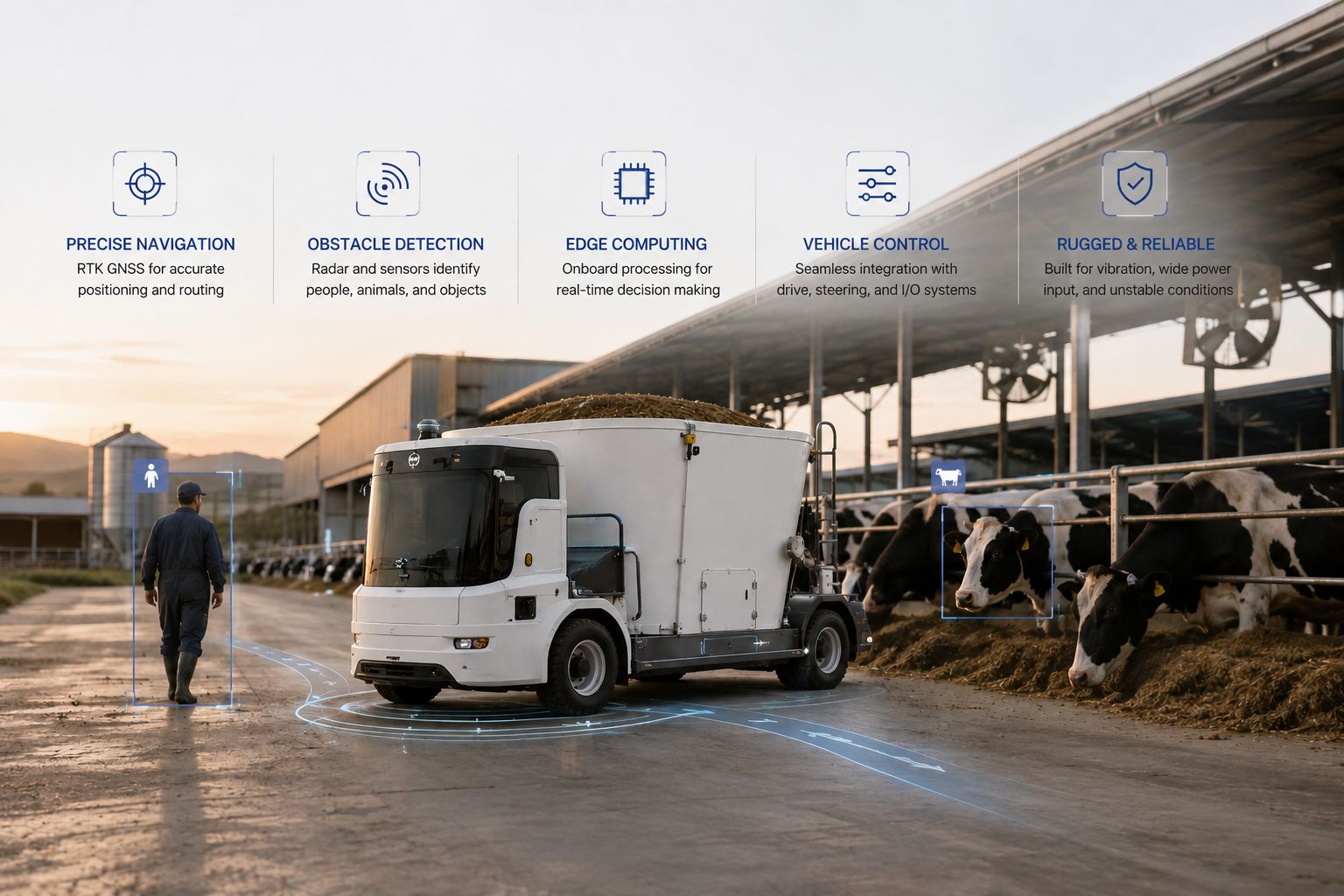
このシステムでは、RTK-GNSSが車両の高精度な位置情報を提供し、レーダーや車載センサーが周囲の障害物を検知します。エッジコンピューティングによってこれらのデータを車両上でリアルタイムに処理することで、計画されたルートに沿った自律走行と車両制御を支えます。
ミキサーフィーダーの自律走行に求められる技術要件
ミキサーフィーダーを自律走行させるには、単に車両を自動で動かすだけでは不十分です。走行中も自車位置や周囲の状況、車両の状態を継続的に把握し、変化に応じてリアルタイムに対応できるシステムが求められます。
まず重要となるのが、高精度な測位と周囲環境の認識です。ミキサーフィーダーは計画されたルートに沿って走行する必要がありますが、農場内では作業者や家畜、ほかの農業機械などが走行エリアに入る可能性があります。そのため、自車位置を正確に把握するとともに、周囲の障害物をリアルタイムに検知し、変化する環境の中でも安定した自律走行を支える必要があります。
また、自律走行では、測位情報や周囲のセンシングデータ、車両システムからの情報を継続的に処理し、走行や車両制御に反映する必要があります。車両が移動している間もデータをリアルタイムに処理できる性能と安定性が、周囲の変化に素早く対応するための重要な要件となります。
さらに、車載コンピュータには長時間の運用に耐えられる堅牢性が求められます。飼料の混合や積載、車両の走行によって継続的な振動が発生するほか、車両電源の電圧も変動する可能性があります。毎日の給餌を担うシステムだからこそ、こうした環境下でも安定して稼働し、予定された給餌作業を中断させないことが重要です。
ABOX-5222が支える測位・センシング・車両制御の統合
SINTRONESのABOX-5222 Edge AI Computerは、Intel® Core™ Series 2 Processorを搭載し、ミキサーフィーダーの車載コンピューティングプラットフォームとして採用されています。RTK-GNSSから取得した高精度な位置情報やレーダーによる障害物情報などを車両上でリアルタイムに処理し、ルート走行や車両制御を支援します。データ処理をエッジ側で行うことで、常時のネットワーク接続に依存することなく、現場で必要な処理を実行できます。
さまざまな車載機器との接続に対応するため、ABOX-5222は6ポートの2.5GbE、4ポートのUSB 3.2、シリアルポート、DIOに加え、オプションでCAN FDをサポートしています。これにより、測位機器、レーダー、センサー、車両システムなどを一つの車載コンピューティングプラットフォームに接続できます。
こうした振動や電源変動が生じやすい車載環境に対応するため、ABOX-5222はMIL-STD-810Hに基づく振動・衝撃試験に対応し、9~60V DCのワイドレンジ電源入力と電源保護機能を備えています。この堅牢設計により、長時間にわたる安定したコンピューティングと車両制御を支えます。
自動給餌から広がるスマート畜産の可能性
畜産農家にとって、スマート化の目的は単に設備を増やすことではなく、日々繰り返される作業の負担を自動化によって軽減することにあります。給餌は毎日欠かすことのできない重要な作業です。ミキサーフィーダーが自律走行に対応することで、繰り返し行われる運転作業の人手への依存を減らし、限られた人員を経験や判断が求められるほかの農場管理業務に振り向けやすくなります。
エッジコンピューティングは、スマート畜産のさらなる拡張を支える基盤としても活用できます。農場の運用ニーズに応じて、センサーや車載機能、ほかの自動化システムを段階的に追加することで、既存の作業フローを一度に大きく変更することなく、スマート農機の機能を拡張していくことが可能です。
また、エッジAIコンピュータの演算能力を活用することで、自律走行を支える車載コンピューティングに加え、さまざまなAIアプリケーションへと用途を拡張できます。例えば、カメラとAI画像認識を組み合わせた家畜や作業者、周辺機器の認識、車両やセンサーから取得したデータを活用した異常検知や機器状態の分析などが考えられます。こうしたAI処理をエッジ側で実行することで、現場で取得したデータをリアルタイムに分析し、より高度なスマート農機アプリケーションへと発展させることができます。
日々の反復作業に伴う人手の負担軽減から、スマート農機の機能拡張まで、エッジコンピューティングは畜産農家が実際の運用ニーズに合わせて新たなセンシング、制御、AIアプリケーションを段階的に導入するための基盤となります。こうした段階的なスマート化により、個別設備の自動化から、より柔軟で拡張性の高いスマート畜産へと発展させることができます。