

Optimizing Automated PCBA Coating Lines with Edge Computing and Ultra-Compact Industrial PCs
Why Real-Time PCBA Coating Inspection Matters in Electronics Manufacturing
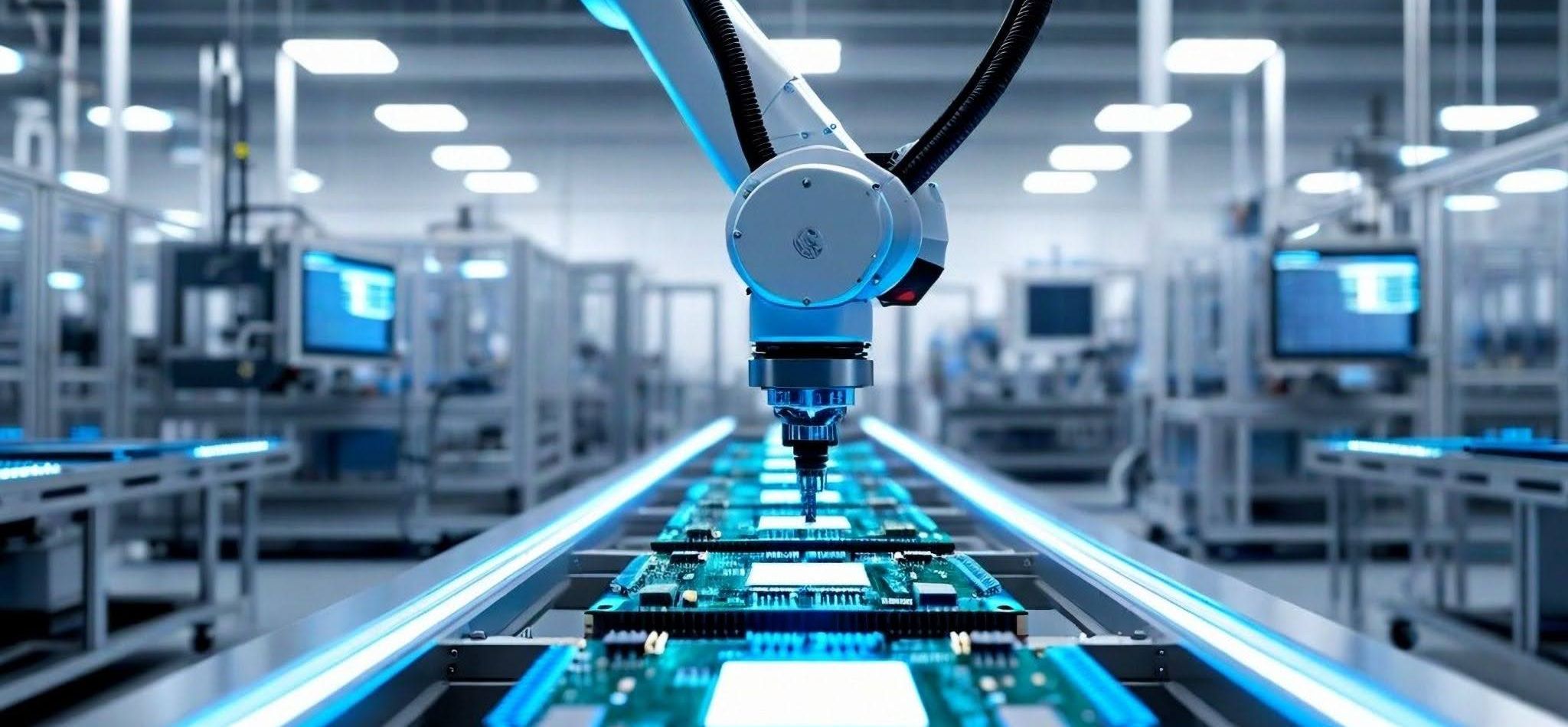
In today’s fast-evolving electronics manufacturing industry, automated PCBA coating inspection systems powered by Edge Computing and machine vision technologies are becoming essential for ensuring production accuracy, reliability, and long-term product durability. The reliability of a Printed Circuit Board Assembly (PCBA) often hinges on the quality of its conformal coating. This protective layer is the primary defense against moisture, dust, and chemical contaminants. As PCBAs become increasingly dense and complex, manufacturers are turning to real-time edge inspection and industrial edge computing to ensure precise coating application without slowing down production throughput.
However, deploying high-performance computing directly inside automated coating systems introduces major engineering challenges. Industrial computing platforms must withstand vibration, operate in compact machine environments, and process massive volumes of visual inspection data with ultra-low latency.
High-Speed Automated Inspection in Space-Constrained Coating Systems
A leading provider of automated coating solutions recently faced a critical bottleneck while developing their next-generation machine. To achieve the precision required for modern electronics manufacturing, the company needed to integrate high-resolution machine vision cameras for real-time coating defect detection and automated inspection feedback. This created a massive data-processing demand that required high-bandwidth 2.5GbE connectivity and low-latency edge processing to maintain the production line speed and inspection accuracy.
The engineering team quickly encountered a major obstacle: traditional industrial PCs were far too bulky to fit within the machine’s narrow control cabinets. Furthermore, the system needed to be installed close to the high-speed robotic arm controlling the coating process.
The constant, repetitive mechanical stress and intense vibrations generated by continuous robotic movement created a serious reliability risk for conventional computing hardware. In previous system iterations, these harsh operating conditions frequently caused cable displacement, unstable connections, and unexpected system crashes, resulting in costly production downtime and manual maintenance intervention. For smart manufacturing environments operating 24/7, even brief interruptions can negatively impact production efficiency, inspection consistency, and operational costs.
Deploying Edge Intelligence with the SINTRONES SBOX-2625
To bridge the gap between high-performance industrial computing and extreme space constraints, the customer integrated the SINTRONES SBOX-2625. Powered by the Intel® Twin Lake platform, this ultra-compact fanless PC redefined what is possible within a 150 x 106 x 55mm ruggedized form factor.
The SBOX-2625 served as the real-time edge computing processing hub for the automated coating cell. Its dual 2.5GbE and USB 3.2 Gen 1 ports allowed for the seamless ingestion of massive data streams from the inspection cameras, enabling the system to identify coating defects in milliseconds. To withstand the harsh physical environment, the SBOX-2625 features a ruggedized, fanless architecture and a specialized cable-lock mechanism. This vibration-resistant industrial PC design ensured stable connectivity and uninterrupted operation even under continuous robotic motion and repetitive mechanical stress.
For additional operational reliability, the integrated Watchdog Timer provided an automated recovery mechanism capable of independently rebooting the system during unexpected software anomalies, reducing the need for manual technician intervention. With support for real-time industrial automation workloads, the platform enabled stable automated inspection directly at the edge without relying on cloud-based processing delays.
Business Impact: Leaner, Faster, and More Reliable Production
The integration of SINTRONES edge intelligence delivered immediate and measurable business value. By leveraging the SBOX-2625’s miniature footprint, the customer was able to reduce the size of their control cabinets by 30%. This footprint optimization not only lowered the Total Cost of Ownership (TCO) but also made the machines much easier to deploy in crowded factory environments.
Beyond physical savings, the ruggedized design eliminated the frequent failures previously caused by mechanical vibration. The result was a more stable 24/7 automated production environment with reduced maintenance requirements and improved operational uptime. With support for a wide 9-36V DC power input enabled seamless integration into existing industrial power infrastructures, simplifying deployment across diverse manufacturing environments.
As edge-driven inspection systems become increasingly critical in smart manufacturing and electronics production, rugged edge computing platforms capable of delivering real-time processing in vibration-intensive and space-constrained environments will play an essential role in the future of industrial automation.